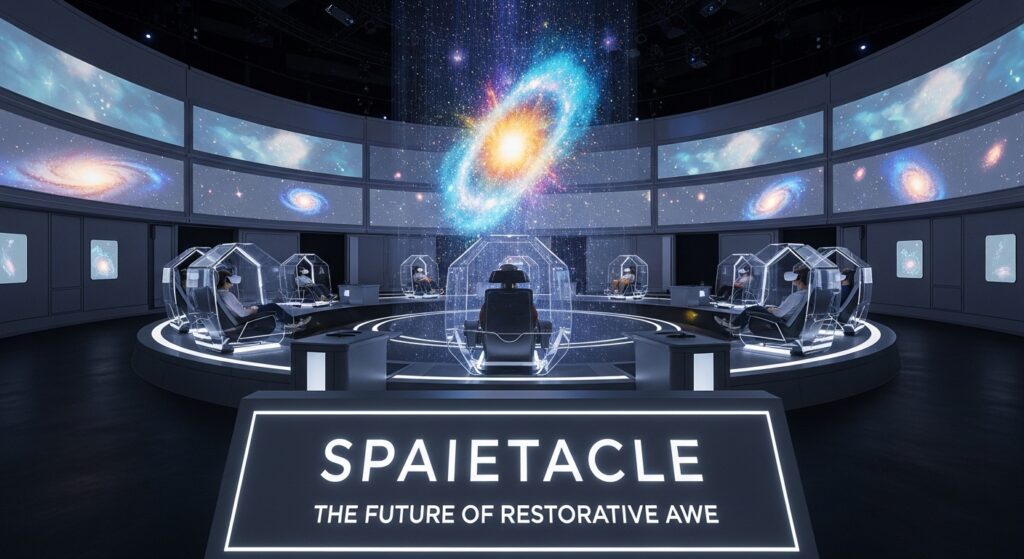
There’s a moment in every product team’s journey when the interface they built starts to feel slightly out of step with how users actually behave. Features exist, dashboards work, flows are intact—but something about the experience feels static in a world that has become increasingly dynamic. This is where the idea of spaietacle begins to matter. It describes a new generation of digital experiences that don’t just respond to users, but actively adapt to context, behavior, and intent in real time.
Spaietacle is not a tool or a framework you can install. It is a design and system philosophy that blends spatial awareness, adaptive interfaces, and intelligent behavior into a single experience layer. For startup founders and tech professionals, it represents a shift away from fixed interfaces toward environments that evolve as they are used.
Understanding Spaietacle in Real-World Terms
At its core, spaietacle describes digital systems that behave more like environments than static applications. Instead of presenting users with fixed layouts and predefined workflows, these systems adjust themselves based on how users interact with them.
In traditional software design, the interface is constant. A dashboard looks the same whether you are a new user or a power user. You navigate it, learn it, and adapt to it.
In a spaietacle-driven system, the opposite happens. The system adapts to you.
For example, a project management platform might reorganize itself based on urgency, highlighting deadlines when pressure increases and surfacing strategic insights when activity slows. A SaaS analytics tool might prioritize different metrics depending on whether a user is in exploration mode or decision-making mode.
This shift changes the relationship between user and product. Instead of learning the system, the system learns the user.
Why Spaietacle Is Emerging Now
The rise of spaietacle is closely tied to changes in both technology and user expectations.
On the technology side, real-time data processing, machine learning models, and cloud-native architectures have made it possible to build systems that adapt continuously. What once required complex manual configuration can now be automated through behavioral signals and contextual analysis.
On the user side, expectations have been shaped by highly adaptive platforms. Streaming services recommend content with precision. Navigation apps adjust routes in real time. E-commerce platforms anticipate purchase intent before users explicitly search.
These experiences have reset the baseline. Users no longer tolerate rigid systems. They expect responsiveness, personalization, and context-awareness by default.
Spaietacle emerges as a response to this expectation gap.
The Core Principles Behind Spaietacle
While spaietacle is not a formal technical standard, it is built around a set of guiding principles that influence how modern digital experiences are designed.
Context-Driven Interaction
Spaietacle systems prioritize context over static structure. They interpret not only what users do, but also when, where, and how they do it.
A task performed under time pressure may trigger a different interface than the same task performed during exploratory browsing. This contextual sensitivity allows systems to reduce friction and increase relevance.
Adaptive Interface Behavior
Instead of fixed layouts, spaietacle systems rely on adaptive interfaces that evolve in real time.
This does not mean chaotic or constantly changing designs. It means intelligent reconfiguration—surfacing the right tools, information, or actions based on current user intent.
Predictive Experience Design
Spaietacle systems aim to anticipate needs before they are explicitly expressed. This is achieved through behavioral modeling and pattern recognition.
For instance, a financial application might surface budget warnings before a user reaches a threshold, or suggest optimizations based on spending habits.
Continuous Feedback Learning
Every interaction becomes input for future system behavior. Over time, the system becomes more accurate, more efficient, and more aligned with user expectations.
This creates a feedback loop where experience quality improves with usage.
Spaietacle vs Traditional UX Systems
To understand the shift more clearly, it helps to compare spaietacle with traditional user experience design approaches.
| Dimension | Traditional UX Design | Spaietacle Approach |
| Interface Structure | Fixed and predefined | Dynamic and adaptive |
| Personalization | Rule-based | Real-time behavioral adaptation |
| User Journey | Linear and static | Context-aware and fluid |
| Data Usage | Periodic analysis | Continuous streaming insights |
| Experience Goal | Usability | Intelligent responsiveness |
This comparison highlights a fundamental change: spaietacle does not simply improve usability—it redefines how systems behave.
Real-World Applications of Spaietacle
Spaietacle is already influencing how modern digital products are being built, even if the term itself is still emerging.
In fintech platforms, interfaces are beginning to adjust based on financial behavior patterns, surfacing insights that help users make decisions in real time rather than after analysis.
In e-commerce, product discovery is becoming increasingly adaptive. Instead of static category browsing, users are guided through personalized pathways shaped by intent and behavior.
In enterprise tools, dashboards are evolving into intelligent workspaces that prioritize tasks dynamically based on urgency, collaboration activity, and user role.
Even in education technology, systems are beginning to adapt learning paths based on comprehension speed and engagement levels, creating more personalized learning environments.
Across industries, the pattern is consistent: systems that adapt reduce friction and increase engagement.
Building Spaietacle Into Modern Products
For startups, implementing spaietacle does not require rebuilding systems from scratch. It starts with incremental design and architectural decisions.
The first step is improving behavioral visibility. Understanding how users interact with a product in detail is essential for identifying meaningful patterns.
Next comes dynamic interface design. Instead of static layouts, teams can introduce flexible components that adjust based on usage patterns and context.
Real-time data pipelines are also essential. Without continuous data flow, adaptive behavior cannot function effectively.
Equally important is establishing feedback loops that allow systems to learn from every interaction. This ensures that improvements compound over time.
Finally, cross-functional collaboration between design, engineering, and product teams is critical. Spaietacle only works when adaptability is embedded across the entire system.
A Practical Breakdown of Spectacle Components
To make the concept more tangible, here is a structured view of how spaietacle operates within a system:
| Component | Function in System | Impact on Experience |
| Context Engine | Interprets user environment and intent | Increases relevance |
| Adaptation Layer | Adjusts interface in real time | Reduces friction |
| Prediction Module | Anticipates user needs | Improves efficiency |
| Learning System | Refines behavior from interactions | Enhances long-term personalization |
These components work together to create a system that behaves less like software and more like an adaptive environment.
Challenges in Implementing Spaietacle
Despite its advantages, spaietacle introduces several challenges that must be carefully managed.
Data complexity is one of the most significant. Real-time adaptive systems require continuous streams of high-quality data, which can be difficult to maintain at scale.
Privacy is another critical concern. As systems become more aware of user behavior, transparency and ethical data handling become essential.
There is also the risk of over-personalization. If systems become too adaptive, they may reduce user control or create unpredictable experiences.
From an engineering perspective, scalability and performance optimization are also key challenges, especially in real-time environments.
The Future of Spaietacle
Spaietacle is still in its early stages, but its trajectory is clear. As digital systems become more intelligent, interfaces will increasingly shift from static layouts to adaptive environments.
Future systems may not just respond to user input but proactively shape workflows, environments, and decision-making processes.
With advancements in AI, spatial computing, and behavioral analytics, spaietacle will likely evolve into a foundational principle of digital product design.
For startups, this represents a major opportunity. Those who adopt adaptive design principles early will be better positioned to build products that feel intuitive, intelligent, and deeply engaging.
Conclusion
Spaietacle represents a fundamental shift in how digital experiences are designed and delivered. It moves beyond static interfaces and predictable workflows, introducing systems that understand context, adapt in real time, and continuously evolve.
For founders and tech professionals, this is more than a design trend—it is a strategic direction that will define the next generation of digital products.In a world where user expectations are shaped by intelligent, responsive systems, spaietacle provides a blueprint for building experiences that feel less like software and more like living environments. The future of digital interaction is not static—it is adaptive, and spaietacle is at the center of that transformation.