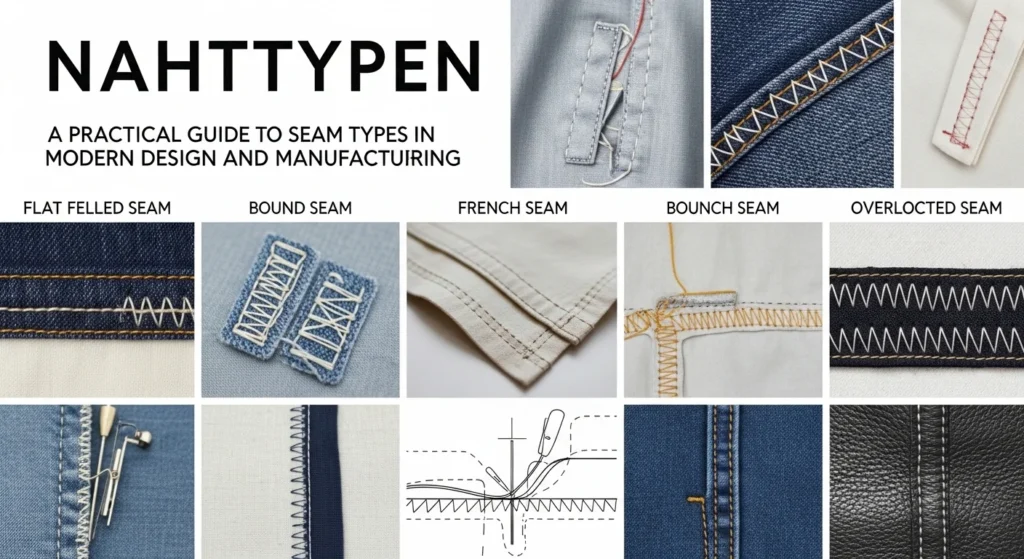
In the world of modern manufacturing and smart apparel design, nahttypen are far more than simple sewing techniques—they are the structural foundation of durability, aesthetics, and performance in textile products. From high-performance sportswear to luxury fashion and even industrial fabrics, the way materials are stitched together determines how a product behaves in real-world conditions.
For startup founders and tech-driven entrepreneurs entering the fashion-tech or smart manufacturing space, understanding nahttypen is not optional—it is strategic. It influences production cost, product longevity, user experience, and even sustainability metrics. In an era where digital design tools and automated sewing systems are reshaping production lines, stitch types have evolved from craft knowledge into data-driven engineering decisions.
What was once considered a purely manual skill is now deeply connected to automation, material science, and product innovation.
Understanding Nahttypen in the Modern Textile Ecosystem
At its core, nahttypen refers to different types of seams or stitch constructions used in textile manufacturing. Each stitch type serves a specific purpose—whether it is reinforcing fabric, allowing stretch, improving durability, or enhancing aesthetic appeal.
In traditional tailoring, seam selection was based on craftsmanship and experience. Today, however, digital pattern design software and automated stitching machines allow manufacturers to select precise seam types based on performance requirements and material behavior.
For example, a startup developing athletic wear cannot rely on standard stitching used in formal clothing. The garments must stretch, breathe, and withstand repeated stress. This makes nahttypen a technical decision rather than just a design choice.
Understanding this shift is crucial for companies building scalable apparel products or integrating smart textiles into wearable technology.
Why Nahttypen Matter for Modern Product Development
For entrepreneurs in fashion-tech, e-commerce apparel, or industrial textiles, nahttypen directly influence product-market fit. A poorly chosen seam type can lead to product failure, increased returns, and damage to brand reputation.
On the other hand, optimized stitching can significantly improve product performance and reduce manufacturing waste. This is especially important for startups that need to balance cost efficiency with quality consistency.
In smart manufacturing environments, seam selection is often integrated into digital product lifecycle management systems. Designers can simulate fabric stress, movement, and durability before production begins. This ensures that the chosen nahttypen align with real-world usage conditions.
In short, stitch types are no longer just a production detail—they are part of strategic product engineering.
Core Categories of Nahttypen in Textile Engineering
To understand how nahttypen function in practice, it is helpful to break them down into core categories based on structure and application. Each category serves a different engineering purpose and is chosen based on material type, usage, and product design goals.
| Nahttyp Category | Description | Common Use Case | Industry Relevance |
| Plain Seam | Basic stitch joining two fabric layers | Everyday clothing | Fast fashion, basics |
| Overlock Seam | Edge finishing to prevent fraying | Knitwear, activewear | Sportswear, mass production |
| Flatlock Seam | Flat joining for reduced friction | Athletic apparel | Performance wear |
| French Seam | Enclosed seam for clean finish | Luxury garments | High-end fashion |
| Bound Seam | Reinforced with binding tape | Industrial textiles | Workwear, heavy-duty fabrics |
Each of these nahttypen serves a specific functional purpose, and selecting the right one is critical for product success.
Technical Breakdown of Key Nahttypen in Modern Manufacturing
Beyond basic classification, each stitch type has technical implications that affect elasticity, durability, and production speed.
A plain seam, for example, is efficient and cost-effective but may not withstand high tension or repeated stretching. It is commonly used in casual wear where performance demands are low.
Overlock seams, on the other hand, are widely used in mass production because they combine stitching and edge finishing in one process. This reduces manufacturing time and increases durability, making it ideal for scalable apparel startups.
Flatlock seams are particularly important in performance-driven industries. They eliminate bulky seam allowances, reducing friction against the skin. This makes them essential in sportswear, where comfort and movement efficiency are critical.
French seams are more labor-intensive but offer a clean, enclosed finish that prevents fabric fraying. They are often used in premium fashion products where aesthetics and quality perception matter more than production speed.
Bound seams add reinforcement and are commonly used in industrial or utility garments that require long-term durability under harsh conditions.
The Role of Technology in Advancing Nahttypen Selection
One of the most significant changes in modern textile production is the integration of digital tools into seam selection and garment design. Computer-aided design (CAD) systems now allow designers to simulate how different nahttypen will behave under stress, movement, and washing conditions.
Automation has also transformed how these stitches are executed. Advanced sewing machines can now switch between stitch types dynamically, reducing manual intervention and increasing production efficiency.
In some cases, AI-driven systems analyze fabric properties and automatically recommend optimal seam types. This reduces trial-and-error in prototyping and speeds up time-to-market for startups.
For companies working with smart textiles or wearable technology, this technological integration is especially valuable. It ensures that functional requirements—such as flexibility, conductivity integration, or sensor placement—are supported by the correct stitching structure.
Business Impact of Choosing the Right Nahttypen
From a business perspective, nahttypen directly affect cost structure, product quality, and customer satisfaction. Choosing the wrong stitch type can increase production costs due to higher defect rates or product returns.
Conversely, optimized stitching improves operational efficiency and reduces material waste. This is particularly important for sustainable fashion startups aiming to minimize environmental impact.
Durability also plays a major role in brand perception. Consumers are increasingly aware of product quality, and stitching failures are often one of the first visible signs of poor manufacturing. A strong seam strategy helps build trust and long-term brand loyalty.
In competitive markets, small improvements in production quality can lead to significant differences in customer retention and profitability.
Challenges in Selecting the Right Nahttypen
Despite technological advancements, selecting the appropriate nahttypen is still a complex decision. One of the biggest challenges is balancing cost with performance. High-performance seams may improve durability but also increase production time and expense.
Material compatibility is another critical factor. Not all fabrics respond the same way to stitching techniques. Stretch fabrics, for instance, require flexible seams, while rigid materials may demand reinforced structures.
There is also the challenge of scalability. A seam type that works well in small batches may not perform efficiently in large-scale automated production.
Finally, sustainability considerations are becoming increasingly important. Some stitching methods consume more energy or produce more waste, forcing companies to rethink traditional manufacturing approaches.
The Future of Nahttypen in Smart Textiles and Fashion Tech
As the textile industry continues to evolve, nahttypen are becoming part of a larger ecosystem of smart manufacturing and intelligent design. The future will likely see increased integration between stitching systems and digital intelligence platforms.
Smart textiles, which include embedded sensors and conductive fibers, require specialized seam structures that support both flexibility and electronic functionality. This opens new opportunities for innovation in healthcare wearables, sports analytics, and military applications.
We are also moving toward fully automated design-to-production pipelines, where stitch selection is optimized in real time based on performance data and user feedback.
In this future landscape, nahttypen will no longer be a static design choice but a dynamic parameter within an intelligent manufacturing system.
Conclusion
Nahttypen represent a critical intersection between craftsmanship, engineering, and digital innovation. While they may appear as simple stitching techniques on the surface, their impact on product performance, scalability, and brand success is profound.
For startups and tech-driven companies entering the textile or apparel space, understanding seam types is not just a technical requirement—it is a strategic advantage. From reducing production costs to enhancing durability and enabling smart textile integration, the right stitching decisions can define the success of a product line.As manufacturing continues to become more automated and data-driven, nahttypen will evolve from traditional sewing knowledge into a core component of intelligent product design.