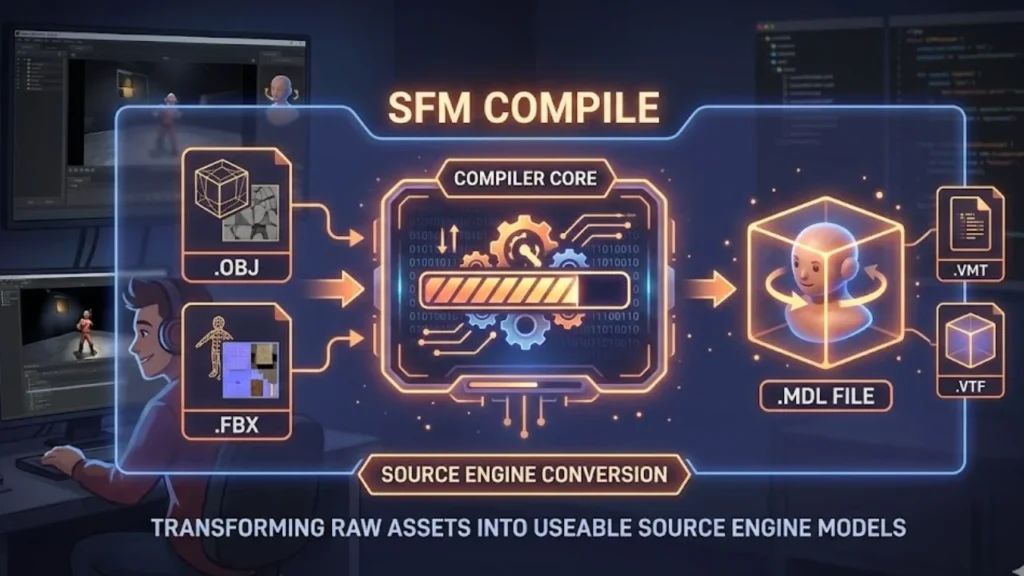
In the ever-evolving world of software development, efficiency, accuracy, and automation are critical. Enter SFMCompile, a powerful tool designed to simplify the compilation, testing, and deployment process for developers and tech teams. For startup founders, tech entrepreneurs, and software engineers, understanding SFMCompile is essential for accelerating development cycles, reducing errors, and ensuring high-quality product releases.
SFMCompile is more than a simple compiler—it is a comprehensive framework that integrates with modern development environments to optimize code compilation, manage dependencies, and automate deployment pipelines. In a competitive digital landscape, tools like SFMCompile can provide startups with the agility needed to innovate rapidly without sacrificing code quality.
What is SFMCompile?
SFMCompile is a software compilation and build automation platform designed to handle complex projects with multiple dependencies. Unlike traditional compilers that focus solely on translating code into executable files, SFMCompile integrates testing, dependency management, and deployment functionalities into a single interface.
Its key advantage lies in its ability to streamline the build process for both small-scale applications and enterprise-level software projects. By automating repetitive tasks, it reduces human error, accelerates delivery timelines, and ensures that code integrity is maintained throughout the development lifecycle.
Core Features of SFMCompile
SFMCompile stands out in the crowded landscape of development tools due to its robust and versatile features:
- Automated Compilation: Supports multiple programming languages and environments.
- Dependency Management: Automatically resolves and integrates library dependencies.
- Integrated Testing: Allows unit, integration, and regression testing within the compilation workflow.
- Continuous Deployment Integration: Seamlessly connects with CI/CD pipelines for smooth production releases.
- Error Logging and Debugging: Provides detailed feedback and logs to quickly identify and resolve issues.
These features collectively empower developers to focus on innovation rather than repetitive manual tasks, making SFMCompile an essential asset for modern software teams.
Benefits of Using SFMCompile
Implementing SFMCompile offers numerous strategic advantages for both startups and established tech companies:
- Increased Efficiency: Automates time-consuming compilation and testing processes.
- Enhanced Code Quality: Integrated testing ensures fewer bugs and higher reliability.
- Faster Time-to-Market: Streamlined workflows reduce delays in development and deployment.
- Scalability: Handles complex projects with multiple modules and dependencies.
- Reduced Errors: Automation and logging reduce human mistakes in builds and deployments.
For startup founders, these benefits translate into faster iterations, more robust products, and a competitive edge in the market.
Real-World Applications of SFMCompile
SFMCompile’s versatility allows it to be applied across various domains, from mobile apps and web platforms to enterprise software solutions. Common use cases include:
- Mobile App Development: Automates builds for Android and iOS platforms.
- Web Application Projects: Streamlines compilation of front-end and back-end components.
- Enterprise Software: Manages large codebases with multiple dependencies efficiently.
- Open Source Contributions: Simplifies building and testing for distributed development teams.
Its ability to handle multi-language, multi-platform projects makes SFMCompile an indispensable tool for developers aiming for high-quality, timely releases.
Comparison: SFMCompile vs Traditional Build Tools
| Feature | Traditional Build Tools | SFMCompile |
| Automation | Limited or manual | Fully automated build and deployment |
| Dependency Management | Manual resolution | Automatic handling of complex dependencies |
| Testing Integration | Requires separate tools | Built-in unit and integration testing |
| Multi-Platform Support | Often limited | Supports multiple languages and platforms |
| CI/CD Integration | Manual setup | Seamless integration with pipelines |
| Error Tracking | Basic logs | Detailed logging and debugging feedback |
This table highlights how SFMCompile consolidates multiple steps into a unified workflow, saving time and reducing potential errors.
How SFMCompile Enhances Development Teams
SFMCompile is more than a tool; it is a strategic asset for teams looking to optimize software development processes. By integrating compilation, testing, and deployment, it enables:
- Cross-Team Collaboration: Developers, testers, and operations teams work within a shared, automated workflow.
- Rapid Iteration Cycles: Faster builds allow for quicker testing and iteration.
- Quality Assurance: Consistent builds with integrated testing maintain high product quality.
- Resource Optimization: Automation reduces the need for manual intervention, freeing developers to focus on innovation.
For startups and tech companies, this means improved productivity, faster launches, and more reliable software.
Challenges and Considerations
While SFMCompile provides significant advantages, implementation requires careful consideration:
- Initial Setup: Configuring SFMCompile for complex projects may require expertise and time.
- Learning Curve: Teams need to familiarize themselves with the platform’s full capabilities.
- Integration: Ensuring compatibility with existing tools, frameworks, and CI/CD pipelines is critical.
- Maintenance: Regular updates and monitoring are needed to keep the system optimized.
Addressing these challenges proactively ensures that the benefits of SFMCompile are fully realized.
Strategies for Maximizing SFMCompile’s Impact
To fully leverage SFMCompile, development teams should consider:
- Tailored Workflows: Customize compilation and testing processes to match project requirements.
- Team Training: Provide comprehensive training on automation, dependency management, and error resolution.
- CI/CD Integration: Connect SFMCompile to continuous integration and deployment pipelines for seamless releases.
- Performance Monitoring: Regularly analyze build times, errors, and logs to optimize efficiency.
- Feedback Loops: Encourage developer feedback to continually refine workflows and tool usage.
By implementing these strategies, software teams can ensure maximum productivity and code quality.
The Future of SFMCompile
As software development continues to evolve, the role of integrated automation tools like SFMCompile will become even more critical. The rise of cloud-native architectures, microservices, and AI-driven development tools will expand SFMCompile’s capabilities, allowing faster, smarter, and more reliable software builds.
For startup founders and tech leaders, adopting SFMCompile today sets the stage for scalable, efficient, and innovative development pipelines that can keep pace with market demands.
Conclusion: SFMCompile as a Catalyst for Software Innovation
SFMCompile is a transformative tool that unifies compilation, testing, and deployment into a single streamlined workflow. By reducing manual effort, improving code quality, and accelerating development cycles, it empowers software teams to deliver high-quality products faster and more efficiently.For startups, tech entrepreneurs, and enterprise developers, SFMCompile is not just a build tool—it is a strategic enabler for innovation, productivity, and scalable success in the competitive digital landscape.